AETHERIA
Light sculptures for tall rooms
- Status
- Study v5.2
- Year
- 2026
- Disciplines
- LightArchitecture
01 · Brief
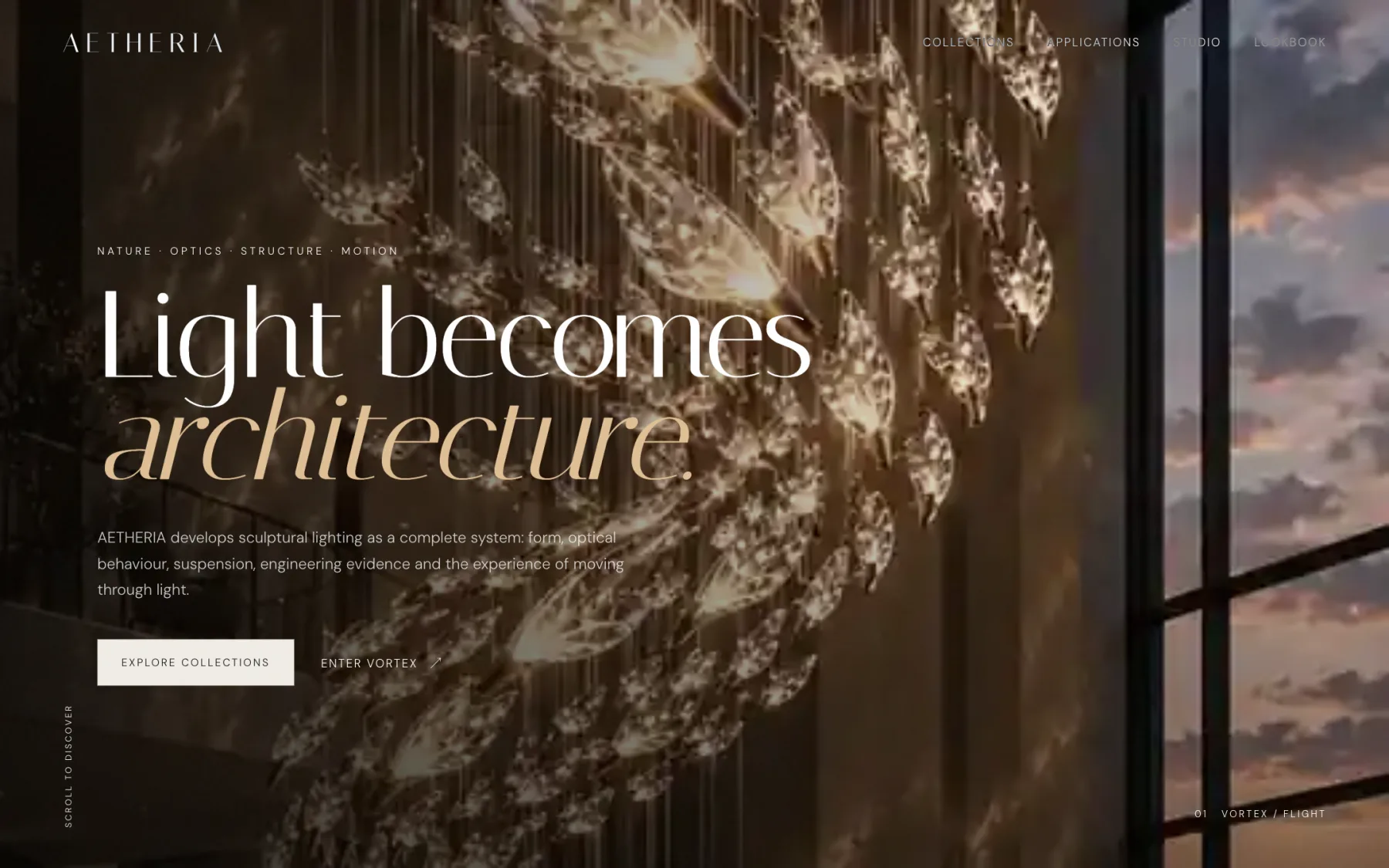
A light sculpture is usually sold on a beautiful render and engineered afterwards, and by the time it’s built the two no longer match. AETHERIA works the other way round: each fixture has one true description, and its drawings, its 3D models and its website are all made from it.
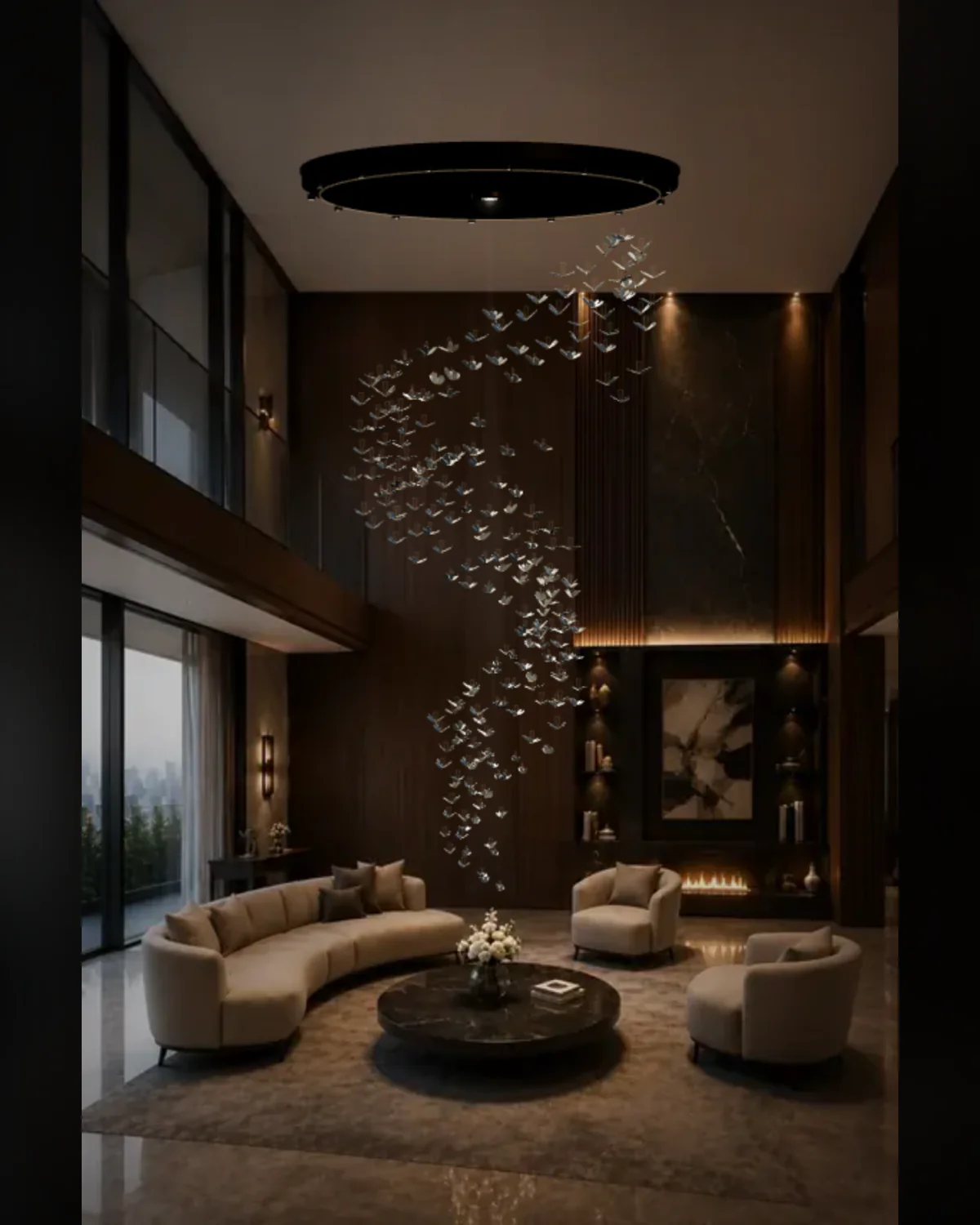
- leaves of light hanging in VORTEX
- 240
- from the ceiling to the lowest leaf
- 4.8 m
- for one full turn, slow enough to feel still
- ~3 min
- warm white light, from 14 adjustable heads
- 3000 K
02
VORTEX
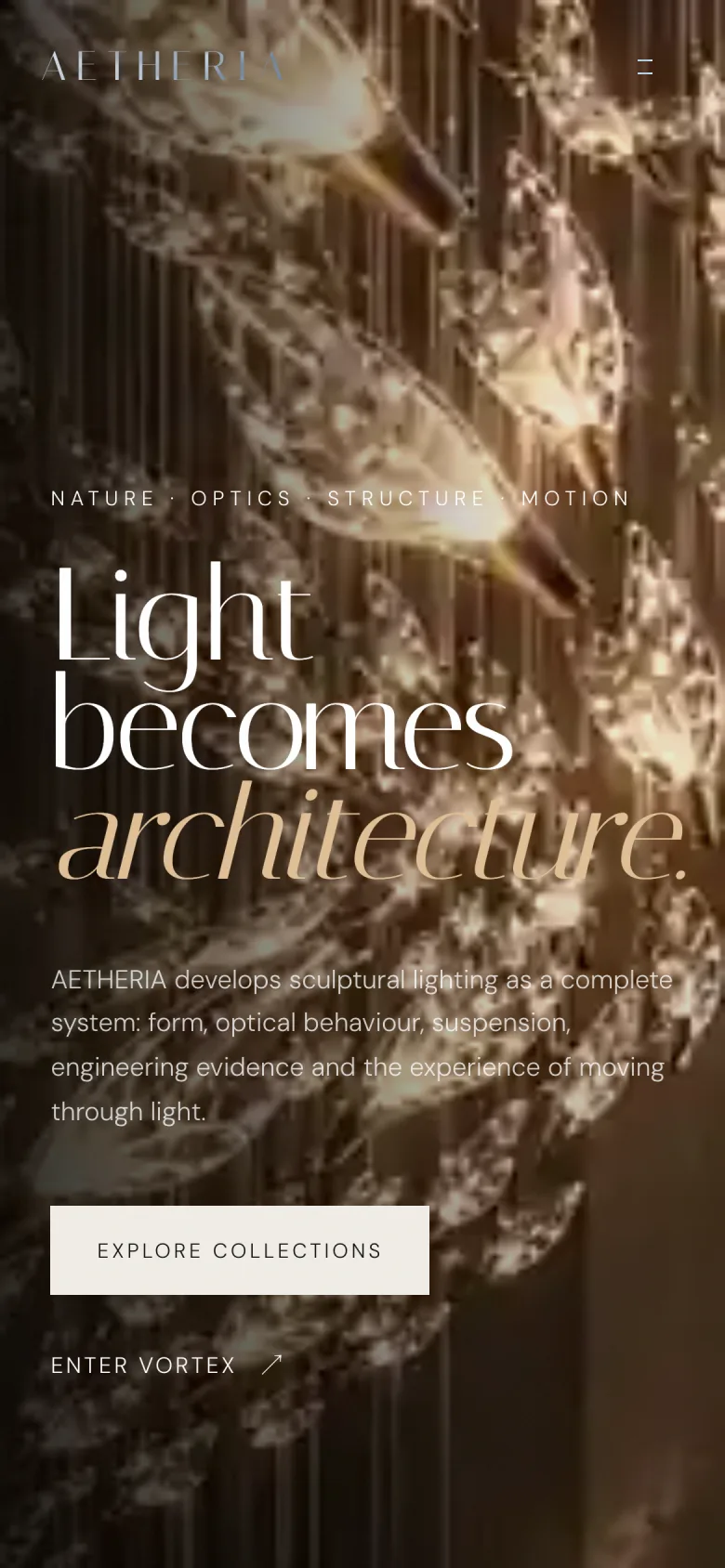
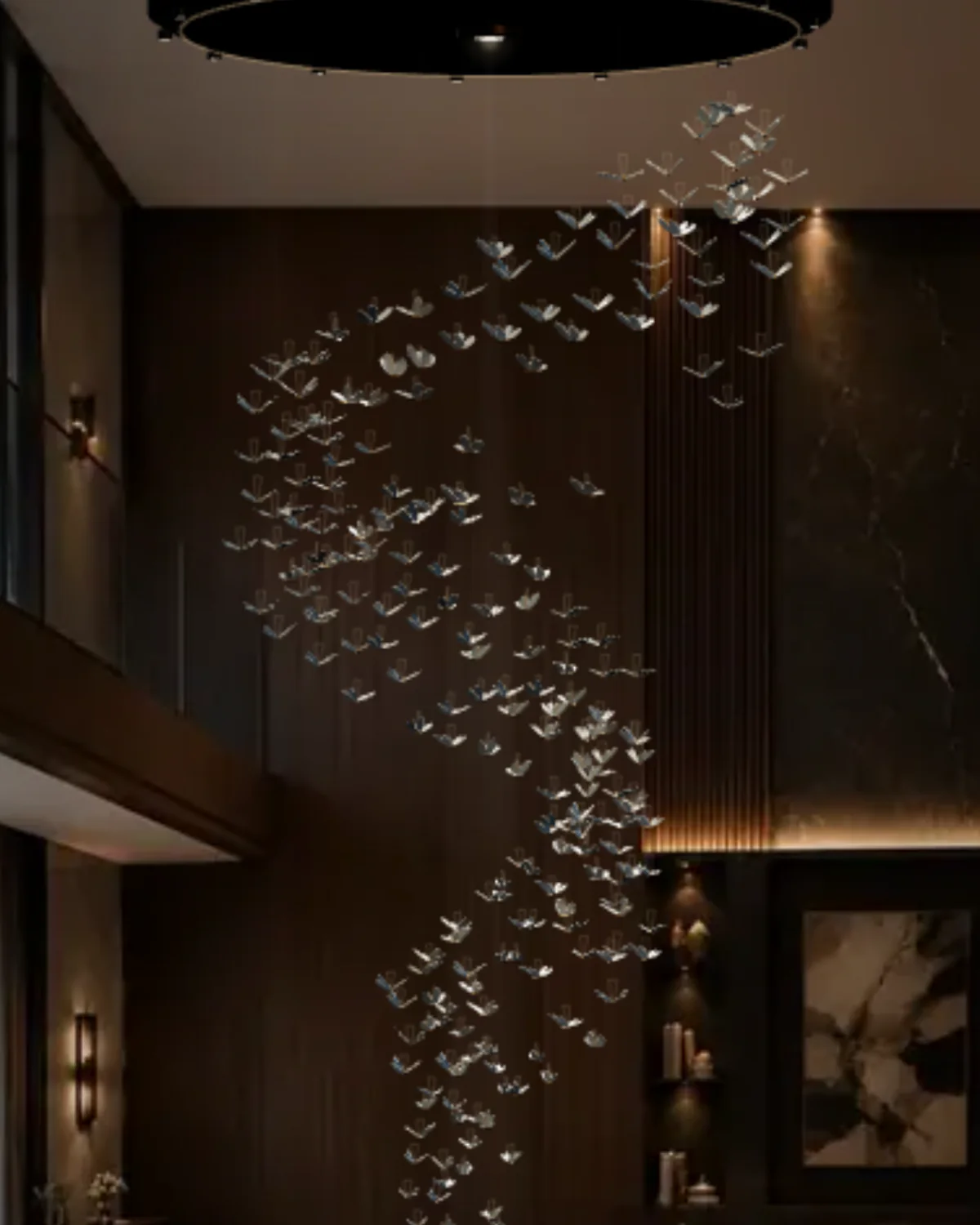
The first fixture is VORTEX: 240 leaves of light, like a swirl of butterflies, falling 4.8 metres from the ceiling and turning so slowly, about a third of a turn a minute, that it seems to stand still. It’s made for double-height rooms in homes, hotels and lobbies.
03
One description, every drawing
Everything about VORTEX lives in one engineering record, and the drawings, the 3D models and the files architects and lighting designers need are all made from it, never the other way round. The version clients see may look a little different, but it can’t go to the workshop until the engineering catches up.
- 01A viewer for clients, to see it hanging in a room
- 02A detailed viewer for architects and engineers
- 03Every model checked before it leaves the studio
04
Honest about limits
Light on a screen is only an impression, so it’s labelled as one. Nothing on the site claims a measured brightness, and the weight, the motor and the safety certificates stay marked unknown until they’ve been engineered.
05
The hard parts and how they were solved
The render drifts from what can be built
ProblemA light sculpture is sold on its render, then engineered later, and the two quietly diverge: different element counts, different sizes, lighting nobody measured.
SolutionTwo records with one in charge. The engineering revision is the authority; the presentation study must declare every way it differs (both have 240 elements, split differently between small, medium and large).
The same files, every time
ProblemDrawings, models and packages rebuilt from the record must not change unless the record does.
SolutionRebuild the release and you get the very same files, down to the last byte, and the model always holds exactly 240 leaves, 240 cables and 14 heads.
Honest light, honest exports
ProblemA browser can’t show tested light, and exporting to other formats can quietly drop or invent engineering detail.
SolutionReal lighting data is traced back to where it came from, and anything unverified stays an honest blank. The browser view is labelled as a concept, and every export says what it leaves out.
Under the hood
How it’s made
The technical side, part by part, for anyone curious about the engineering.
| S-01 | Record | A fixture manifest under 24 versioned JSON schemas: the single source for everything below |
|---|---|---|
| S-02 | Geometry | Python and Blender generate coordination STEP and DXF with QA, and a compressed GLB for the web |
| S-03 | Light | An LM-63 photometry parser with provenance, and an evaluator for candidate light sources |
| S-04 | Viewers | A presentation viewer for clients and a technical inspector for coordination, on the same model |
| S-05 | Proof | About 157 tests; a byte-identical release package |
Made withPythonBlenderglTF
Status
VORTEX is a prototype design, ready to be priced by makers but not yet signed off to build. Ask me and I’ll walk you through the viewers.
AETHERIA isn’t public yet. Ask me for a walkthrough.
hello@rudraknows.com