The Vāv
This portfolio, as a stepwell you can walk down
- Status
- Live
- Year
- 2026
- Disciplines
- ArchitectureLightMusic
01 · Brief
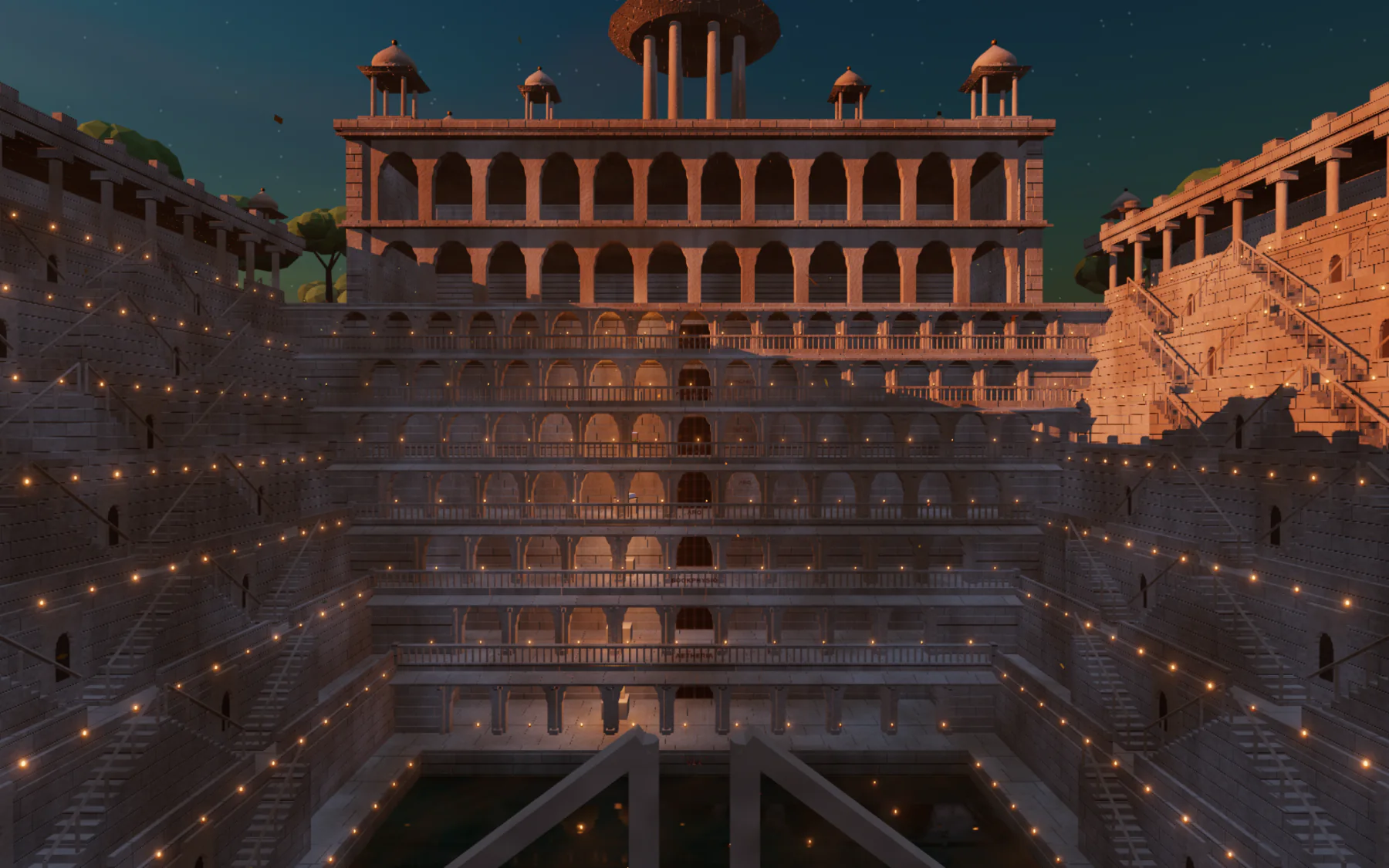
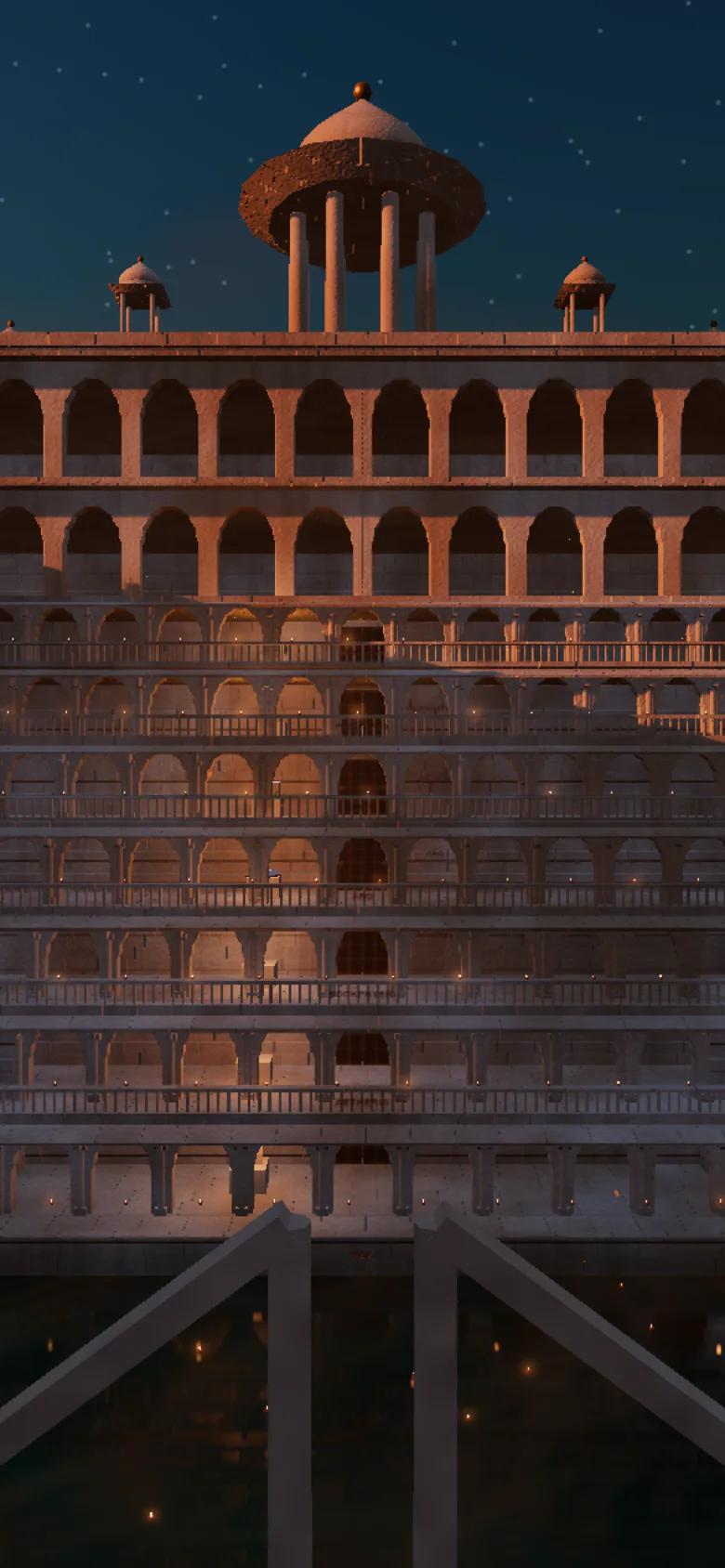
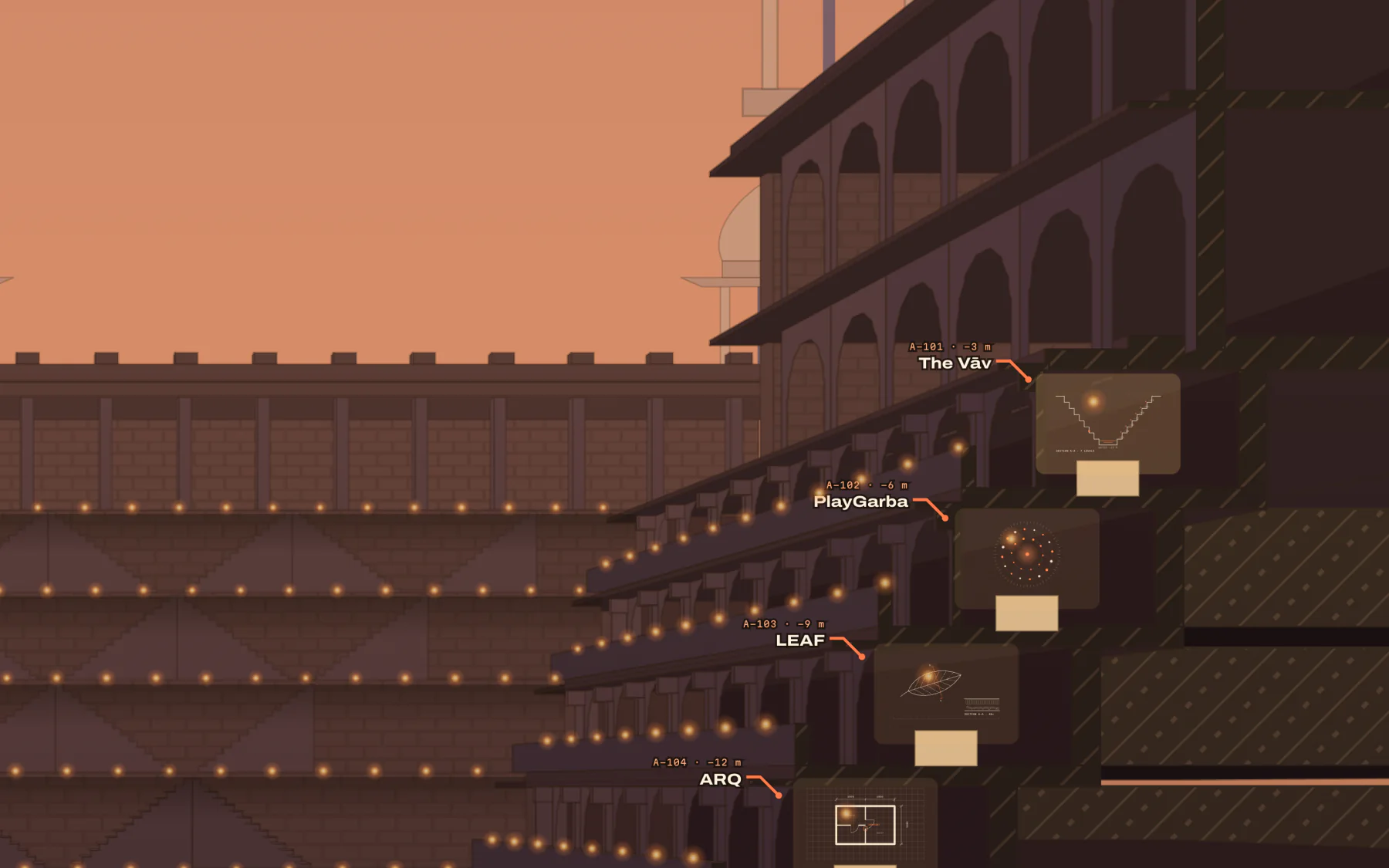
A portfolio is usually a page you scroll past. I wanted one you could stand in. The Vāv is a stepwell, the kind cut into the ground across Gujarat and Rajasthan to reach water, with one gallery for every project on the palace face and a room behind each gallery.
- levels, one gallery and one room for each project
- 7
- model files or recordings: every stone and sound is made in code
- 0
- skies, from dawn to monsoon rain, each with its own sound
- 5
02
Built from one set of numbers
Every terrace, stair and gallery comes from a handful of measurements: how tall a storey is, how far each terrace steps in, how high and deep each step is. Change one and the whole well rebuilds itself to match.
- 01Stairs that zigzag down from level to level, so every flight leads somewhere
- 02A palace of arched galleries on the north face, one storey for each project
- 03Thousands of steps, and still smooth on a phone
03
Listening to the stone
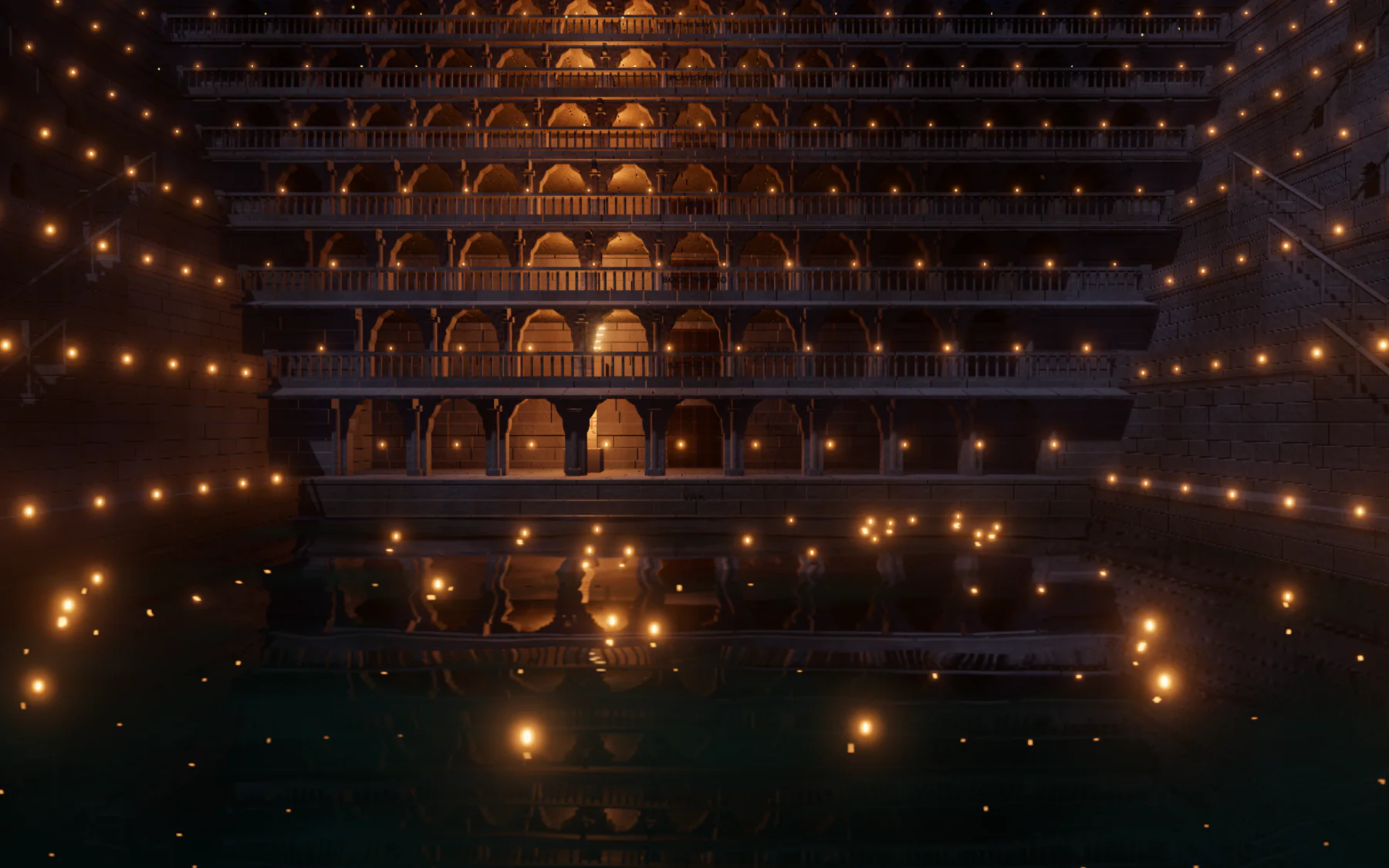
Every sound is made live as you walk. Near the rim it’s open air and birdsong; lower down the walls close in and the echo grows; at the water, a tanpura and the drip into the tank. Step into a room and the weather stays outside.
04
The hard parts and how they were solved
A building made of numbers
ProblemA stepwell is thousands of treads, terraces and arches. Modelled by hand, it couldn’t grow a storey when a project is added.
SolutionThere isn’t a single model file. The whole well is built in code from a handful of measurements: 3 m a storey, terraces stepping in 1.8 m, fifteen treads of 0.2 m by 0.26 m to a flight. Add a project and it gains a level, a gallery and a room.
Sound without recordings
ProblemA stone shaft should sound like one, and change as you go down, without downloading any audio.
SolutionEvery sound is made live in the browser. The echo is worked out from the well’s real size, so it grows longer as you go deeper, sounds come from where they are, and footsteps change from sandstone to a polished floor.
A doorway you can see through, both ways
ProblemEach room is its own scene; a door that cuts to black breaks the place.
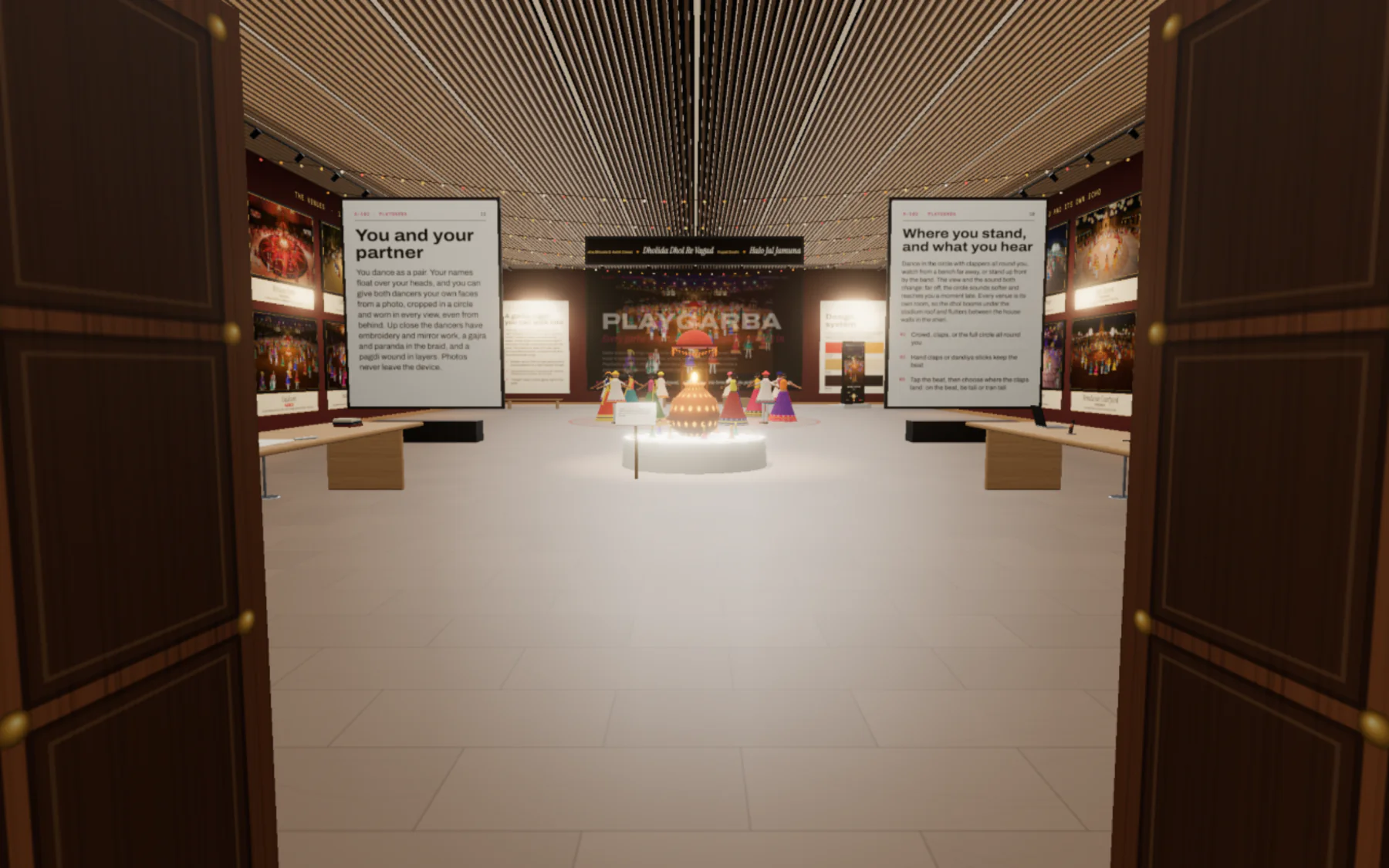
SolutionThe other side is rendered from where your eye would be over there, clipped to the doorway’s own patch of screen, so you walk through without a fade.
Smooth on any screen
ProblemA phone and a big desktop monitor can’t share one quality setting.
SolutionQuality adjusts itself to keep the walk smooth, rooms are prepared before you reach the door, and phones get a lighter scene.
Under the hood
How it’s made
The technical side, part by part, for anyone curious about the engineering.
| S-01 | Model | The stepwell in metres: terraces, flights, galleries, doors and the walk path, from one set of numbers |
|---|---|---|
| S-02 | Render | three.js with ambient occlusion and bloom, five skies, water, rain and a rainbow; about 8,500 lines |
| S-03 | Sound | Web Audio, all synthesised: echoes from the geometry, rain, birds, a tanpura at the water, each room’s own |
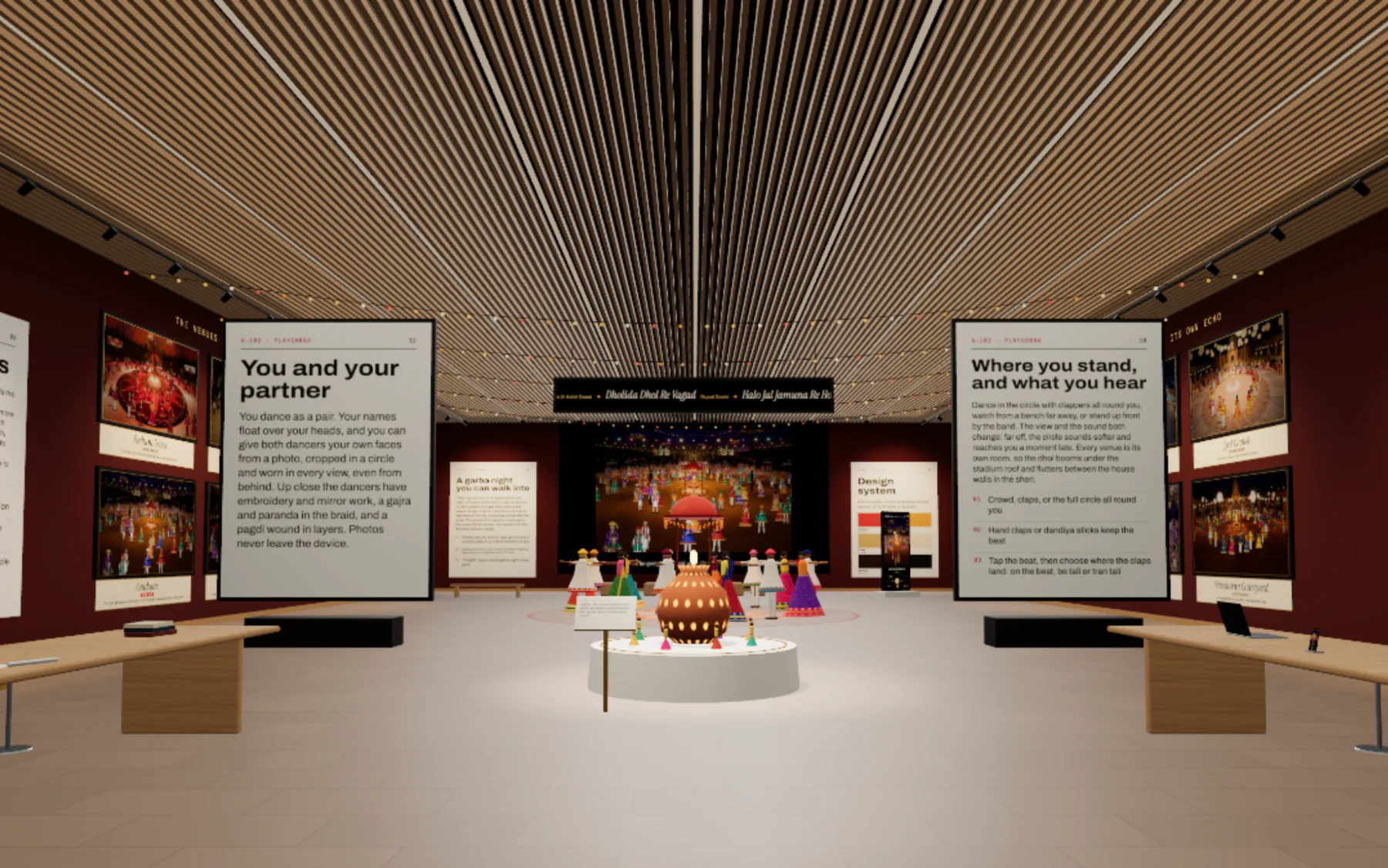
| S-04 | Rooms | Walls painted from each project’s own data, prototypes, still lifes and things to do; PlayGarba’s hall of venues |
| S-05 | Fallback | The same well drawn in SVG at build time, for every browser |
Made withThree.jsWeb Audio
Status
Live at rudraknows.com/vav, and still growing: every new project adds a storey.
Walk it yourself at rudraknows.com/vav, or ask me how it’s made.
hello@rudraknows.com